
Off The Stage – Pt. 3 – (English)
Translated from Spanish. (Para leer en Español, aquí)
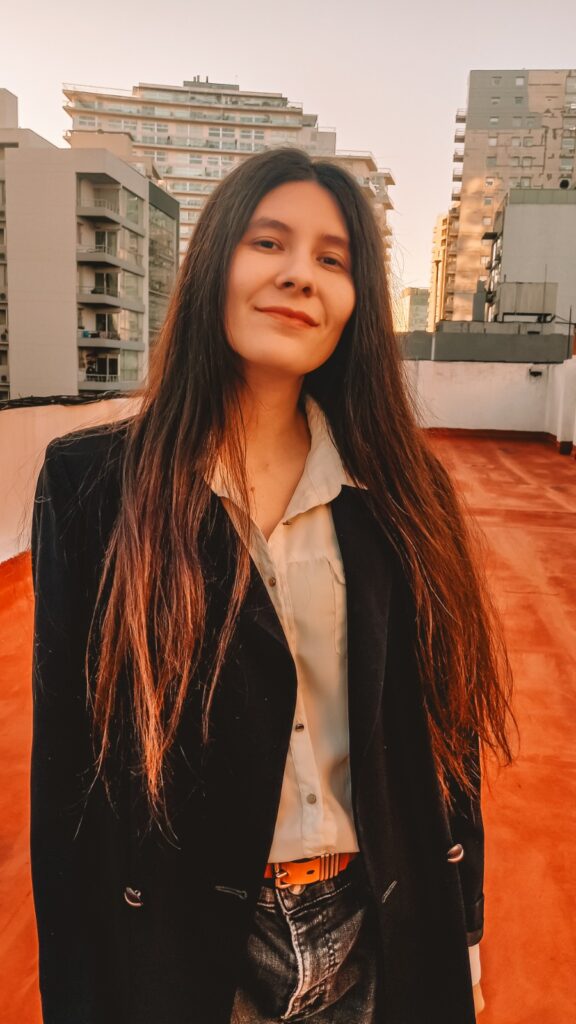
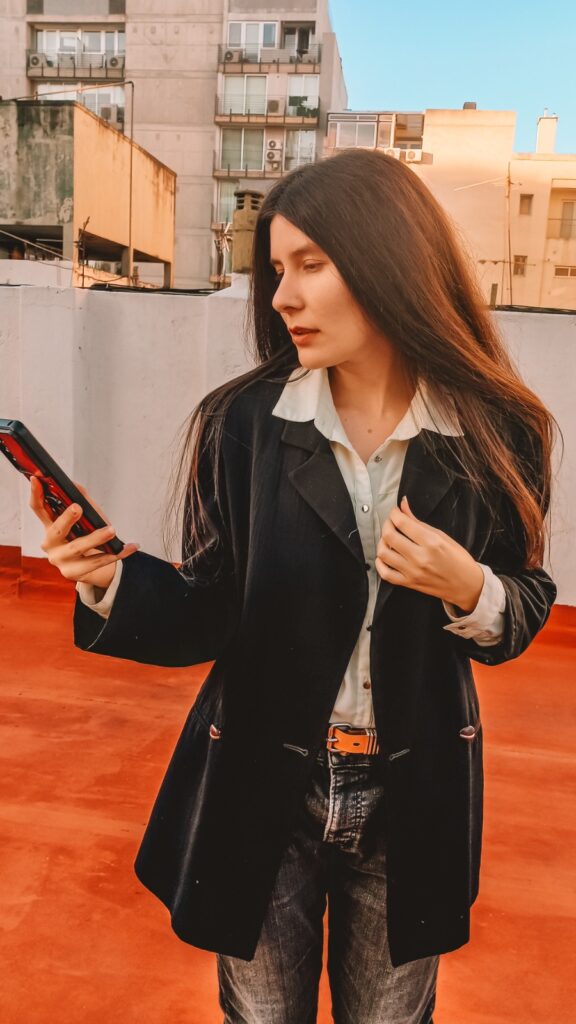
Karen Fernandez. Karen is a professional in communication and music journalism, with experience and a passion for what she does that makes her unstoppable. Her determination and curiosity have earned her over 11 years in the music journalism field with Music Between Us, adapting to the industry’s changes and establishing her as a relevant independent media outlet in Argentina’s underground music scene.
After finding many similarities between her work and what we do at State of Guitars, having this conversation with her was not only enriching but also very inspiring and motivating to keep doing this. Thank you, Karen.
SoG: The intention of this interview series, called “Off the Stage”, is giving a spotlight to all those people who aren’t necessarily on stage, and who, with their work, time, passion, etc., drive the music scene.
I didn’t want to focus solely on the region where I currently live, Vienna, and I wanted to contribute a slightly more global perspective, to find similarities and contrasts in all of our experiences.
And, while I was thinking about who to interview, I remembered that I’d been following you on social media for a while, I think because of an Instagram interview you did with Fin del Mundo. And from there I started following your work as a photographer, the interviews you’ve done, and well, I could see that you also practically live at concerts, just like me. And since we have so much in common, I thought it would be interesting to hear your perspective and motivations, etc.
And well, first of all, thank you very much for your time and willingness.
~~~~~~~~~~~~~~~~~~~~~~~~~~~~~~~~~~~~~~~~~~~~~~~~~~~~~~~~~~~~~~~~
But anyway, I’d like to propose a mental game that I think is cool to kick all this off.
The premise is: aliens exist and have come to Earth to restructure everything in the world. They have been studying humanity and are convinced that creativity, the arts, and music are what distinguish our species from any other.
And somehow, they find themselves hovering over Buenos Aires and thought Niceto Club was the perfect place to land. They see you wandering around with your camera, taking photos, interviewing musicians, etc., and they think you’re the worthy human representative of the arts.
As a representative, you’ll have to decide how you would restructure the music scene. If you were to change something, what would you change?
Karen (K): Okay, that’s a great question. Well, first of all, thank you for the opportunity to be part of this. And well, to restructure the scene, let’s say in general, in terms of opportunities for everyone … I would mainly focus on self-managed or independent media, which I’ve been involved with for several years now.
And perhaps what I would suggest as an improvement, which would be great, is that more importance be given to independent and self-managed media outlets, or that they be provided with more resources and the opportunity to connect. This could be, of course, through articles, press conferences, interview series, or coverage itself, etc.
And well, that this happens more often, [that agencies/production companies or the artists themselves] reach out to you [to invite you to cover or collaborate], and that’s great. I think it would be good, because other agencies perhaps prioritize larger media outlets or those with more followers or greater social media presence, and we’re kind of stuck in that area. It would be good to also consider smaller media outlets that don’t necessarily have as much reach or exposure as larger ones, so that both can coexist, whether it’s the more well-known or “mainstream” media and those that are constantly struggling, right?
SoG: Okay, yes. So, your restructuring plan would be to make alternative media a bit more horizontal, in terms of reach.
K: Of course, it should be more equitable. There are some who do it now, that they call those who are more well-known or have more followers, but also some smaller media outlets, and that’s good, that both can be represented. But sometimes, of course, it’s a bit of an uphill battle, and it would be good to have that horizontal structure, for example, as a way to restructure the scene. Personally, I think I would go in that direction.
Then, yes, there are several good things that come up a lot as you go to events and such, meet people, etc. That also helps a lot in getting people to pay more attention to you, generating contacts, etc. But yes, my first thought would be that, that there should be more equality in small and large media outlets.
SoG: Ah, I like it. Good representative. I’m definitely voting for you with the aliens. It’s time to shake things up a bit and bring some equality to us too.
K: Yes, absolutely. And it’s also great what you were saying about starting it as a diary, like a ” journal”. It’s good that it started like: ” Well, I’m doing it for fun, because I went to this show, I liked it, and I want to write about it“.
And then it gradually took shape as a media outlet. Then the issue of coverage came up, because I remember when I started, I didn’t have invitations or accreditation; I wasn’t really aware of how it all worked. So, of course, I’d go as a spectator to some show, event, or festival, whatever it was, and then I’d write a report, just for fun, and I’d say, “Well, I have this space to share it“.
SoG: Sure, in fact, that’s how we operate. We have our other jobs, and this is purely out of love for music; it’s what drives us to do this. And well, this pent-up creativity that I have to release one way or another, I channel it here.
That’s why when I found out about MBU Magazine, I felt a certain familiarity with what we have at State of Guitars, and that’s why you came to mind almost immediately for Off The Stage .
Hence my curiosity to know, what was that pivotal event that led you to start this magazine? I read on your website [here] that it originated from a union of Big Time Rush fan clubs or something like that. And I’d like you to tell me more about the magazine’s origins.
K: The magazine’s origin, yes, it’s actually related to that. I had become friends with one of the girls who ran the Katelyn Tarver fan club, who is a singer and an actress on the show. And well, I was working on Heffron Drive fan club, which was another project one of the members of Big Time Rush had. And well, we were noticing that they weren’t getting as much exposure or reach with their other projects in the big media outlets we used to read, like Billboard or Rolling Stone, and we thought, “It would be great if they talked about them more“. Or, well, at the time, since they were teenage artists, with a younger audience, there were magazines specifically for teenagers, like Popstar or, I dunno, TKM and others like that.
So, we sent messages to some magazines asking them to include, I don’t know, at least a poster or a small photo in one of their issues, or some brief mention of what they did. And some of them did listen to us, or some did take our requests seriously, especially those made on social media, at that time Facebook.
But like others, they didn’t have as much reach. So, we said: ” It would be great to have a place, a media. A magazine where we could talk about those artists we like who don’t have the exposure, or the reach… like other artists in other, bigger media outlets“.
And well, that’s how it came about, kind of like saying, “Okay, let’s talk, let’s share music among ourselves“, you know? And the magazine’s name, in fact, was kind of a fusion of a song by this girl, Katelyn, I can’t remember if it was the title or a verse of the song that said something about ” between us”. And we started thinking, “well, it’s a music magazine, so we’ll call it ‘music X’” And that’s how the “between us” got there. And of course, the phrase “Music Between Us” speaks of sharing music among us, like between the readers and those who make the magazine, because after all, the idea was to create a mean for music lovers and by music lovers, something about sharing and unity.
And at that time, when we started, I was in my first year of journalism, which was the first degree I started after high school, {and my partner} was starting graphic design. So we said, “Let’s use it to edit the first editions with the tools we acquired there, and apply them to the digital editions“. And well, that’s how it came about as an online magazine about music, mostly, which, at first, was quite English-speaking, and then we also ventured a bit into the world of indie and alternative music.
[…] so we were [putting together] a media outlet to be able to talk about what we like, and also listening to people’s suggestions. I remember for the first edition we started asking which artists they would like to see, who we could talk about, what audience to target, and so on.
And well, that’s how the magazine came about. We started with digital editions that we published on a single page. Then there was the website on Wix, which came a while later, but it was more of an excuse to keep talking about it. Publishing news/updates or things that were mostly recycled content from other sites, […] was something we did sporadically due to time constraints and such. But it was good because we coordinated things together, figuring out what would be in each edition, who we were going to talk about, what the sections would be, and all that brainstorming and stuff. It was really great.
SoG: That’s so cool. I love it, because I genuinely see us [SoG] reflected in this, because it’s just about the love of music. I mean, the intention is: “Well, I want this artist I like so much to get more exposure, or for people to talk about them more, or for people to listen to them“. It’s all about this somewhat selfless love for art, for music. I find that very admirable and beautiful.
And well, you’ve been at it for eleven years, almost twelve. Regardless of whether the magazine was very densely populated with articles at the beginning or whatever, or if it’s different now, … eleven years of keeping this afloat for the love of it, that’s crazy.
K: It’s a lot, yes. Thank you. And yes, absolutely. It started like that, kind of for the love of it. And that, of course, has its pros and cons. Sometimes, the fact that it’s an “ad honorem” (Volunteer) publication, right? Or that it doesn’t have any kind of monetary profit, is sometimes complicated in certain situations where you say, “Well, we have to cover the expenses ourselves and so on, or we don’t have the means to pay the contributors“. And they do it out of kindness or also for the love of it. And sometimes, I think, it would be good now that I’m in the management role, to be able to somehow compensate the work they do. But, well, we always clarify in our calls for submissions that it’s all volunteer work, and that’s it, that it’s a place for them to gain experience and so on. So, even though there’s no way to pay them with a salary or anything like that, they can have the opportunity to go to a show and, of course, start building their media presence. Whether it’s writing a report or taking photos, and so on.
SoG: Sure. As a human representative to the aliens, you can do something about it.
K: Yes. And that’s also a matter of growing as a media outlet and so on. It would be great to maybe start doing exchanges, some kind of sponsorship, or something like that. Right now, we have a donation page, but well, eventually.
[If you would like to make a donation to support her work, here]
SoG: Well, let’s hope that, among us independent media outlets, we give each other a little more promotion, even if it’s on the other side of the world. Whether it generates income or not, the mere fact of having started it and keeping it going is something truly admirable.
And, in fact, I had just read not long ago, around March 8th, an Argentinian magazine had shared a statistic that in Latin America about 20% of the positions in the music industry are occupied by women. And I think it’s crazy that it’s still such an unbalanced issue at this point. Maybe it would be a good idea for the aliens to reform things, wouldn’t it?
K: Absolutely. Yes, that too. The fact that it’s still so limited at this point in 2026 is something that needs to be reviewed, something that some sectors of the scene or the industry in general should perhaps rethink, both in terms of artists/singers, and also the venues and spaces. Perhaps more visibility could be given to female journalists, photographers, or reporters.
Sometimes it happens that they end up giving more importance to someone who may have been in the business for fewer years, but is a man, or is a friend of someone, or who knows what. And well, that gives them a bit more access. And then, of course, [female journalists] are relegated to the role of the fan […] But yes, those things still happen, unfortunately.
But there are also many media outlets there, with a strong presence of female communicators, and I think that’s great.
There needs to be room for everyone. That’s something that should definitely be changed, it should be among the things to be restructured, I completely agree.
SoG: Let’s vote for Karen as our human representative. That statistic really surprised me, and I wanted to connect it to this interview because, even though it’s an independent outlet and you’re barely scraping by, it’s a media outlet that’s sustained by women. So, I think we could also make it more horizontal, even though we’re still an outlet without funding or support, we could give visibility, or a space to other colleagues who are passionate about this. And not reduce them, as you say, to the fan, or worse, the groupie. What you do is journalistic work that needs to be recognized.
Also, since you decided to start all this, your magazine, talking about music, and so on, the amount of work behind it is a ton. There’s so much to do, and that usually remains hidden within this whole structure of the music scene. And I wanted to ask you, how do you manage to balance your time between studying, press, work, and life?
K: Oh yes, it’s a challenge. Sometimes the motivation is there, and other times, well, you end up tired after classes or work and you don’t feel like doing anything and you say, “Well, I’ll do it tomorrow“. And so, I’m kind of my own boss, so to speak, and I can give myself those spaces, you know, to say, “Okay, I’ll do it in a little while, now I’m going to rest a bit“.
I try to find a balance between the two. For example, when it comes to photos, when I have to edit them and so on, I’ve even ended up editing them on public transport, on the subway, on the train, etc., kind of editing them on my phone so I can meet all the deadlines, or schedule a post, distribute a flyer, etc. And I schedule them first thing in the morning, so they’re uploaded when my followers are most active.
Currently, there are several of us: a couple working on the news report, three women who frequently cover events for photography, and so on. But yes, there are between five and ten of us who go with accreditation, which they usually give you one or two, the reporter and the photographer.
So, we put together the agenda based on the accreditations that are sent to us, and we note down who wants to cover the event, and so on.
There were also some events where we attended as spectators, separately, paying for admission, {and so on}.
SoG: Of course, it’s about balancing getting accreditation, or trying to get it, with buying your ticket to also support your local artist. And with a team of ten people, you can collectively organize who goes to what.
I also wanted to ask you something that I think is very important, at least for me right now, because staying active in this field, in this scene, is not easy at all.
It sounds easy to say eleven years, but in a decade I feel that the way we consume music or consume music media has changed a lot. How do you think you have survived this?
K: It definitely affects things a lot, it’s like it’s completely different, like what it was in 2014, digital media is nothing like it is today. I mean, we started by posting on Facebook and Twitter, then the website on Wix, and that was it. Then we had to adapt to the times, the Instagram boom, switching to Instagram and making it our main social network, where the news and everything else goes.
And with social media, there’s that constant need to generate content for people to see, a photo, a reel , and so on. Sometimes I do think, well, to gain more visibility, you have to post a reel of yourself talking. And, for example, the interviews and that kind of thing really grabs people’s attention, luckily, that’s a format they like. Sometimes they end up watching the excerpt we upload in reel format more than the full interview on YouTube; maybe someone who’s a fan of the artist will stay and watch the whole ten or fifteen minutes.
And then there’s that, a lot of immediacy. These days, social media demands that everything be pre-digested, that the information be right there, short and sweet.
SoG: Right, and the advantage is that’s how I discovered your work. From a reel of an interview with a band I like. I stumbled across your YouTube channel, and maybe it’s just my old soul, but the interviews seemed too short. I thought, “Oh no, fifteen minutes, how can that be? I want more“. But that’s how I consume music, and I know it might be a strange case because I’m an old guy who likes hour-and-a-half interviews.
K: Yes, that’s right. I feel the same way. And regarding the length, on the one hand, there’s this idea of immediacy and that everything has to be quick. And on the other hand, there’s the time they allow us, like when it’s an interview, because there are often several media outlets there to do the story. So, you try to shorten it a bit or focus on questions that are specific to that artist. There have been other times when they’ve been longer. One interview lasted about eighteen minutes, with a duo and a singer, and well, we were relaxed, the conversation was very pleasant, and they liked to talk a lot, so it kind of went on longer, and that wasn’t a problem, because the other media outlets arrive later.
But yes, usually there’s a bit of a “I’m not going to take up any more of your time” attitude, so I get straight to the questions. Or if it’s an event with several artists, it’s like: “Okay, let’s see who we can interview, who’s available, who we can announce now…” And so on, all quick, flash interviews.
SoG: Right, and that’s where I understand it’s a different story. It just seems very curious to me, at least, comparing how I like to do interviews, and how our outlet is text only, and I’m too old-school for this modern approach.
K: Ah, but it’s perfect. I mean, there are articles that are interesting, written interviews, and of course, I might come across a long interview or read an article or a written interview, if it’s about an artist I’m interested in, and I say, “Well, I’ll stay and read it, see what they have to say“. And it’s a way of doing things that still holds up in these times.
But yes, the issue of the format, the graphic medium, I think it has to continue to exist and that it’s interesting. It’s good; you might want to start reading but don’t have time, so you pause it to continue later.
[Here’s a mental rambling and connections between seemingly nonsensical topics, fueled by my ADHD]
SoG: I had seen a post from Gorillaz bassist, Seye Adelekan, he often shares his perspectives and experiences as a musician in the industry, and so on. And he said something that really hit me hard: “You don’t need to be famous to have a music career“. He highlighted the frustration behind this gap that sometimes exists between having created something beautiful, something you poured your heart into, and the recognition you receive for it. And then that recognition can be measured in views, followers, readers, listeners, and so forth. And I wanted to ask you, what keeps you inspired to continue doing this work? because might be that sometimes the work you do doesn’t get the recognition it deserves. What keeps you hooked on it?
K: Motivation comes from many things, but it’s usually about passion for art; it’s always there, latent, whether it’s music or sometimes we talk about film as well. And well, it also has to do with the career I’m currently pursuing.
But yes, above all, the love of art is paramount, and then other things happen that are also rewarding. The recognition, the connections you make along the way, the colleagues you meet and spend time with at events, the enriching conversations, or interviewing an artist, and then seeing them again and them recognizing you from that article, building a reputation from that, the people you meet along the way who recognize your work as a journalist/photographer.
When it comes to motivation, it varies from day to day. Some days you’re eager to give it all on the project, and other days you’re completely unmotivated. And, well, the things that happen in life affect and influence you all the time.
SoG: That’s cool. At this point, I think this is where I’m going to find the most similarities between people participating in Off the Stage, because I remember, the first interview in the series, with the director of Spinda Records (read the interview here). He told me that, regardless of whether it’s profitable or not, what he gained from it were precisely these experiences, and that’s what he’ll take to his grave. And I understand him; recognizing yourself among peers, with musicians and other people in the industry, is something that enriches the heart. I mean, it feels great that we leave a little mark on something we’re so passionate about.
And on that note, I also wanted to ask you, what do you think is the role of independent media in the industry?
K: Good question. Well, I think their role is to give exposure to those who are just starting out and who might later take off or become big names, and to those who might fall by the wayside, whether by choice or circumstance. But I think that’s what independent media outlets offer: the opportunity to listen to anyone who’s starting out and help them with promotion. To say, “Hey, I’m going to share what you’re doing, this is good“. And to be able to give them that space, that platform. Of course, whether they take off or not will depend on many factors, but it’s mainly about that: the opportunity to hear all kinds of voices.
“… sometimes you have to be bold, not be afraid to go and ask.”
SoG: Of course, selfless sharing. It can be this love that was sparked by a song that touched us deeply, and simply thinking, “I want the world to hear it. If it moved me, maybe it will move someone else too”. That’s something I see in your work and that of other colleagues. And the consistency, doing this work without monetary compensation, but with so much passion. Has all this time taught you anything? Any lessons learned?
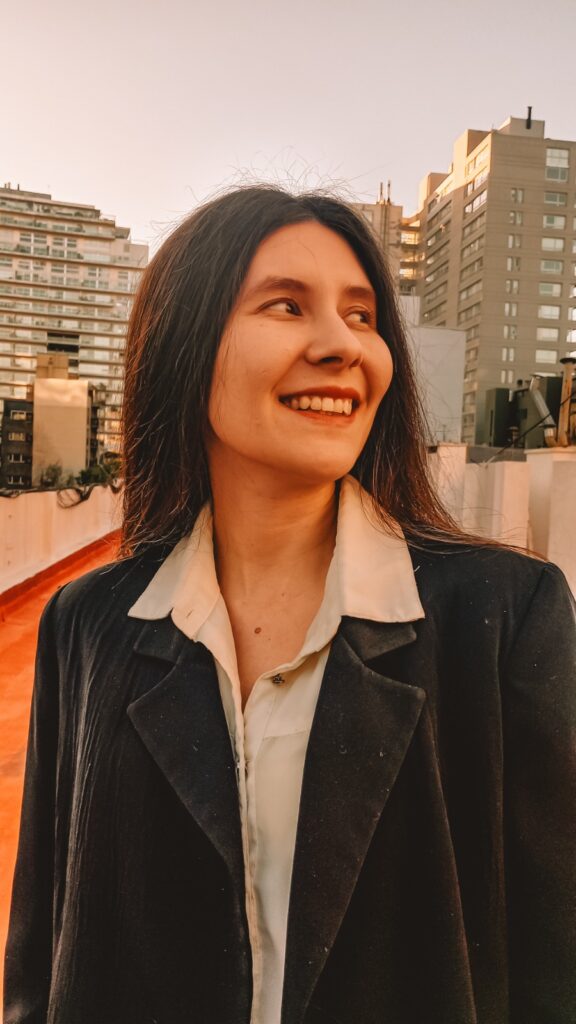
K: I think so. As a life lesson in general, well, maybe sometimes you have to be bold, not be afraid to go and ask. A lot of it comes down to being brave, going out and looking for those opportunities. And others just happen on their own, but yes, there’s a lot of that saying, “Well, I’ve got this idea in my head “, whether it’s a crazy idea or not, or, “Well, it’s within the realm of possibility, we’ll see, but let’s give it a shot and see what happens“.
[Little did she know, after this I reached out to the person I’m interviewing for the closure of the series. A person I admire so much and never thought she would be part of this.]
SoG: Yes, of course. You put words to a very vague, unstructured idea I had. So yes, I’ll take it.
Going back to what we were saying at the beginning, about the Argentinian music scene, the general perception is that they’re incredibly passionate, and people are completely devoted to the music. The artists love them and love playing there. And that gives me the impression of a very close-knit and active scene, with this strong sense of community. Concerts everywhere, fresh and new music constantly emerging, everyone committed to expressing themselves and supporting each other.
In your experience, how different is this idealization of the Argentine scene from reality?
K: It also depends a lot on the artists, on the mainstream scene, and perhaps even more so on the independent or underground scene. But in general, it’s true that there’s a camaraderie. And yes, this sense of fellowship that develops as a community of artists who share dates because they share the same audience or to reach new audiences.
And on the one hand, I’ve seen more of this drive in independent spaces, this desire to move forward and do it even without a huge budget, events done purely for the love of art and their ideals. I think it’s fantastic. And I see it most of all in the independent scene, the camaraderie, the bonds that are formed. Absolutely.
SoG: That’s so cool. Whenever I looked at the Argentinian music scene, from my perspective in Mexico and now here, my theory was that the independent scenes are very active, very united, and yes, although there can be everything, positive and negative, let’s say that this unity of the scene persists. And I think that’s also ideal for developing as an independent journalist, right?
K: Yeah, totally, it gives you more space, more room. There’s also the issue of the post-pandemic scene; after 2020 there was a real desire to get out and play, to say something, to get back on stage. And that’s when a lot of new bands emerged, along with new generations of young guys who are starting out and killing it.
And beyond the current state of the scene, the point is to forge those connections, to talk about certain artists, new artists, and see what happens. And perhaps some kind of collaboration with the media, and well, more or less, of course, what you’re doing with this series, right? Or how do you have it planned?
SoG: I had thought of it for the scene, in general. Partly because of how I understand the work or role of the independent media in “the industry,” which was precisely to build the scene, if it doesn’t exist, or if it already exists, to keep it solid.
And at first, I thought, “Okay, I think the scene and the public need to see a little bit of what’s behind it (Off the Stage), not only in Vienna, but worldwide“. I want to offer this perspective so that the local media and scene can identify these similarities or differences …
K: Sure, a little noise. And yes, that’s perfect. I really think it’s great to find common ground and differences too. And yes, it’s a really good idea. So, well, obviously, thanks again for considering me.
SoG: Thank you so much for taking the call and the interview. Because I feel like that’s what’s needed, this little push of: “Look, they’re doing this here and they’re doing incredibly well“. And I wanted to use as an example people I admire, maybe from afar, or whom I’ve been following for a while now, like your work.
But to wrap things up, before we say goodbye, I wanted to ask you one last question. This is another mind game. (Inspired by one of my favorite music journalists, Susana Medina of Mezclas Abruptas).
Imagine you wake up one day in the middle of the street, look around, and find yourself standing in front of your childhood home. You decide to knock on the door, and when it opens, you see yourself as a little girl. You have the chance to tell her one thing to ensure that little Karen grows up to be the music journalist and photographer you are today. What album or band would you tell her to listen to guarantee this future?
K: Uff. Well, what a question! Well, I would tell her to listen to Blur, because they’re one of those top bands that I say, “Ah, the band of my life“, they really had a strong impact in my youth.
Every now and then I listen to one of their albums, maybe not with the same intensity as before, but yes, they’re a band that really influenced me and I think they also paved the way for me as a music lover, opening me up to different genres, not just pop and rock, but fusions and other things. They brought out my inner music lover, perhaps. With Blur, I started to become more interested in, or rather, more familiar with, artists from other eras or styles I wasn’t used to. So, they kind of opened up that whole world for me.
SoG: Very cool. Great choice, Blur. Agreed.
Very good. Thank you very much, Karen. I hope you enjoyed it as much as I did.
K: Ah, yes, it was a pleasure. Truly, thank you.
[Next, an interview with Javiera Mena so you can check out her work.]