
Off The Stage – Pt. 2 – (English)
(Para leer en Español, aquí)
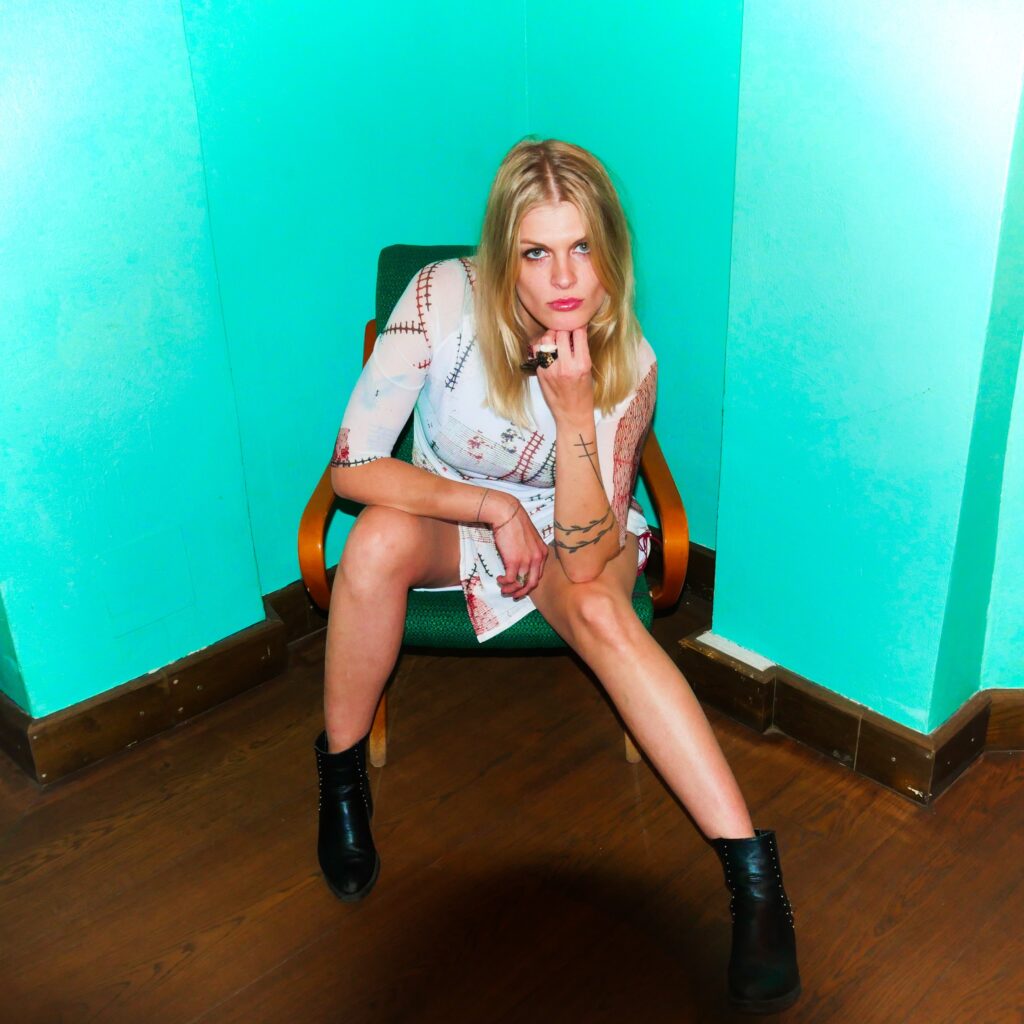
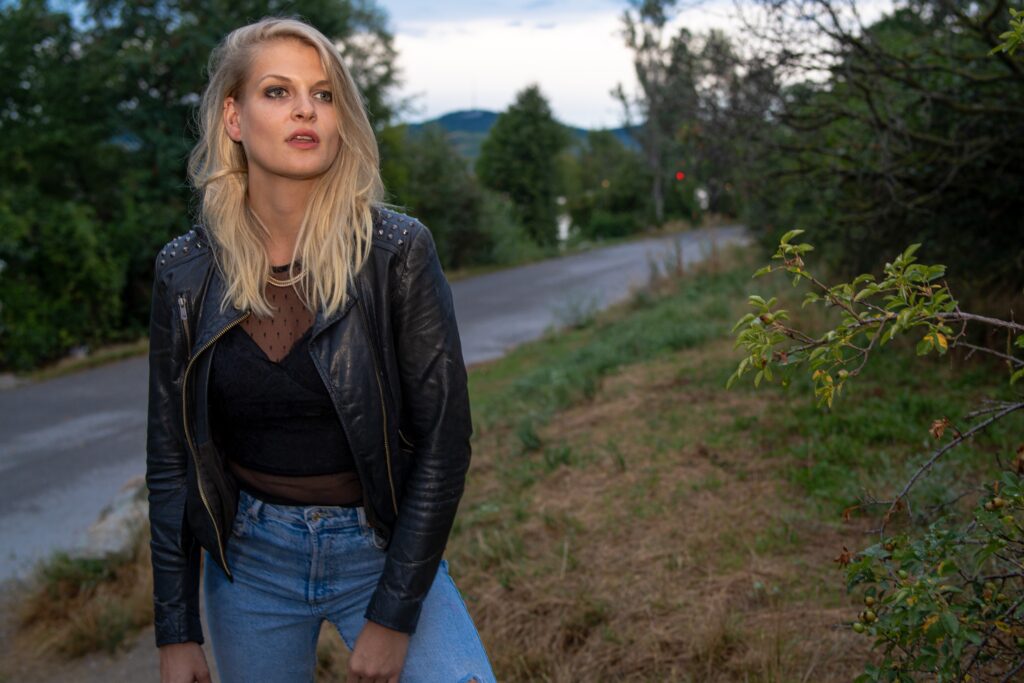
Eva Oswald. She is a talented, multifaceted, and versatile creative woman whose work goes from different ranges of performing acts whereas she projects that same passion for the arts behind the scene. Eva combines her skills and talent to deeply understand the artists needs, making her a dynamic presence both on and Off The Stage.
Below you can be part of an interesting conversation that spans from her youth discovering music should be her profession until now that she has become a key part of the Viennese music scene as PR Manager for Rola Music, or as a Production Manager at Arena Wien. If you have gone to a show at Arena you would have probably seen her at her natural habitat.
SoG: Hi, and thank you for your disposition and time.
So, to give a lil bit of context. Let me start by explaining what this is about, this is another interview (of hopefully many) that is part of a series named Off the Stage. The main intention of this series is to give a spotlight to all those people who aren’t necessarily on stage (as the name suggests). People who, through their work, time, etc. drive the music scene. And overall, the goal would be to find both, similarities and contrasts in the experiences of these unsung heroes.
When I was circling around the idea, thinking who to approach, and so on. I remembered you and I have collaborated in the past, when Rett Smith came on 2024, and that I always get on my email cool bands promoted by you. So, the next one on my list of people to talk to, was you. And I gotta thank you for the availability and openness.
~~~~~~~~~~~~~~~~~~~~~~~~~~~~~~~~~~~~~~~~~~~~~~~~~~~~~~~~~~~~~~~~~~~
So, to kickstart this talk, I prepared a bit of a mental game.
Let’s assume that aliens exist, and they come to earth to reshape everything in the world. They have studied humanity for a while now and they strongly believe that creativity and arts are what distinguishes us from any other species. So they are focusing on that, somehow they land in Vienna and they thought that Arena Open Air was a perfect landing spot and you were there, Up and Down, getting all ready for the next show to come. And they got this idea that you are the human representative of the arts, and you get to choose how to reshape the music scene.
What would you tell them; how would you reshape it?
Eva (E): Ah, that’s a good question. These days we have to give so much money to Meta and big firms like that so people come to the shows, and maybe I would reshape it in the way that we still live like in the nineties, that we go back to listening to full albums, not just only one song, and that we kind of have to buy CDs because there’s no other way to listen to music.
So yeah, basically the good old days when I was a teenager or a child, I think they were a bit better.
SoG: when it was more organic, I guess, go back to the physical forms and not actually thinking of mass media.
E: Yeah, and not these times where you can buy success, like buy streams, … you can buy a lot of stuff.
SoG: Yeah, I also kind of crave these good old times.
When I was doing my research, I found that you have worn many hats along your career. It’s not only impressive but admirable. You have gone from actress to presenter, publicist and even metal singer with Exanimalis (2011) and Halo Creation (2014-2018). And now you’re in this music PR manager role at Rola Music.
It’s clear that music has always been one of your greatest interest. So do you recall what was the moment you realized you wanted to work professionally in this?
E: Yes, that was actually quite early. I think there were two moments where I was so fascinated by music that I knew I wanted to work in this business. First, when I walked by the first metal show I’ve ever heard, I didn’t have a ticket, I just walked by, but it was a lot! you could hear it from outside, I think I was maybe 11 or 12 years old, I stood there for a while {and thought} it sounded so interesting, it really got me.
Another moment was when I was 15, I saw the band Ensiferum, from Finland, live. They’re also a metal band and when I heard the singer I wanted to sing like him, and thought “that’s what should be my profession”.
SoG: Wow, cool. So metal music was what really captured your attention?
E: Yes, metal was a real big part and before that, when I was 13 or so and started to really get interested in music, I also was a big fan of Nirvana. So, I would say Nirvana and metal {got me}.
SoG: That’s cool. And what about your acting career or as radio presenter? How did you get into that?
E: So, I always like to be in the creative business. And while I started my band, we also had drama lessons in our school, and I thought this is also quite interesting. So, I moved to Vienna from Steiermark (Styria) because I wanted to do something creative, and you can do more things like that in a bigger city. So, while I still had a band, I started Communications, {which led me to} also work at the radio for a short amount of time.
Back then acting wasn’t a big part, but when I stopped with the band in 2018, I wanted to do something creative again. And I wanted to get in acting a little more again, so I did some classes at film school. So yeah, every time there’s something creative around.
SoG: I see. There was always this energy or impulse to be creative or to create something. And what got you to work behind the scenes now?
E: When I finished my communication studies at the university, I wanted to work at a music agency or a label, that was pretty clear to me. So actually, I just googled what kind of agencies and labels are here in Vienna. And Rola Music was the first who replied, it did work out really quickly.
And besides the band, I always really wanted to have a job in the music industry and help other bands to get their name out there, get more popular. Music was always my greatest interest. So, yeah.
SoG: I like that it was always clear for you. That’s very cool. And what does a typical day look for you? {considering you play many roles}
E: Well, a typical day … for example, I do work a lot from home with my laptop, doing PR for Rola Music. And I have another job in the music industry, I work as a Production Manager at Arena Wien. So, when I’m doing a show, I work with my laptop after I wake up and then I would drive to Arena to do my job there. And at the same time, I look what castings are there where I can apply myself to … So yeah, that’s quite a typical day I would say.
SoG: Okay, you would say then that Rola and Arena are your main jobs or your main profession.
How do you believe that your on stage experience have shaped your way to work and to approach bands?
E: Yeah, they are.
And it definitely plays a role because, I know what it feels to be in the other role. When I’m working with a band, there are certain issues that can happen at a show, for example, I know what’s the other way like, I know what it means to be in a band. So, I think I can sometimes approach them on a more personal level, I guess.
SoG: It makes sense, not only to be an empath, but to have the real experience of it. And whatever comes up, you totally understand it from their perspective.
Now, going back a bit to Rola Music, I found that the artist roster is very diverse, you have a lot of different types of bands and sounds. How is the scouting/signing of artists? How does that go? Are you all involved in that?
E: That’s also a good question because I’m actually very involved. I’m also doing scouting for Rola Music. And, as you said, we really have a lot of different genres, a lot of different bands from around the world.
A lot of bands also from the US because our CEO works in Portland and in Vienna, but we also have, of course, bands from Europe as well, but also from far away, like Australia. We have bands which are really cool. Also, a band from Panama, which is not so common.
And when it comes to scouting, I actually find a lot of bands simply on Instagram and the Internet, often by coincidence. I listen to them, when I like it, I contact them, and it all goes into a conversation. When it comes to genre, we don’t work with hip-hop because we don’t have so much experience in that, nor with electronic music. But other than that, we really have a lot of different genres and a lot of different bands, that’s really cool.
SoG: It’s interesting that the scouting is just like what, let’s say, every common people do, find a new band you like while browsing. The process is as simple as it can be, it’s very interesting.
And this Panama band that you mentioned is AlphaWhores, right? They just played recently here. Steäm Machine (El Jefe, founder of SoG) just went there [Read the report here]. I couldn’t go to the show, but I found super cool whenever a Latin-American band is being promoted here.
Going back to the question, you mentioned you were very involved on the scouting, suggesting, and picking the artist. But, do all the team gets to suggest bands, or only a few of you? Is it like a democratic work between all of you? How is that dynamic?
E: Yes, it’s a democratic work. Everyone in our team can recommend bands and musicians, but for me, it is really a part of my work. It’s a role in our team for me, but everyone could recommend a band, definitely.
SoG: And what do you look for to collaborate with an artist? I mean, beyond that you like the music of course, but is there something in particular that you’re looking for? I don’t know, is there a checklist that they must comply with?
E: Yeah, kind of. So yeah, you mentioned the music, of course. And then we also look at the numbers. I mean, we work with a lot of small bands, but they can’t be too small, because we’re looking for bands who can go on a tour. So, the numbers on Instagram or Spotify can’t be too low. They should have a little experience playing live already. And there should be a fundament, something should be there already.
And if I could see a little bit of a story of the band, so I can think that that could be interesting to more people. Something that makes them special. I don’t know how to explain it in a better way.
SoG: Yeah, I think I get it, you just “feel it”.
In the previous interview, I was talking to the director of a record label [Berto Caceres from Spinda Records. You can read the interview here]
And it was all about that, something that you cannot touch, but you can feel, and you can just really sense it. It’s just no explanation or clear words to say it, but it’s in the heart.
E: Yeah, that’s true.
SoG: And for example, for your own projects, for you as an artist/performer, what would you be looking from an agency to work with?
E: I would look for a good management, that would be nice. Thinking back of the days in my band, someone who could show us a bit the way, because I mean, now I know more about the business than years ago. But someone who would do a good booking job, like Rola Music. That’s always important for the bands, one of the most important things.
I would say this is really something that Rola Music offers, because we have the {whole} package, like we have booking, PR, and digital marketing, which is necessary these days, you can’t go without it. And yeah, we have a pretty good expert in the team, Marie, who is only doing that and she’s doing an amazing job.
So yeah, I mean, as a young band who wants to go out there, you need a good team like them, that you don’t have to focus on your marketing and booking by yourself. And then you can concentrate on the music and interacting with the fans. You need a good team who knows what they’re doing.
SoG: Yeah, I get it, a lot of the times when I interview bands, they mention that they’re doing everything by themselves and not only music. Sometimes even music comes into a second term, so they get very overwhelmed by that.
And I think the work that you do, overall, it’s taking that weight from them and just let them create. I think, at least that’s my expectation or my idea of your work. Am I right?
Also, interesting that you mentioned it in the first question, but I can imagine that the job as a PR manager has changed a lot in the past decade, you know, with the rise of digital platforms and so on. But what skills do you believe have been essential for you to keep up with this madness?
E: Yeah, my work really changed a lot. When I started, it was more important to get a good article, a good review on your album. And for example, these days there are not many print magazines left and not so many journalists. I mean, {people} like you, doing reviews, really interested in everything. It gets less and less.
But I mean, in my opinion, this will never really die because there have to be people who write about it. And I think that will always be. Like with the radio, we see that it still makes sense because people are still listening to it.
To summarize it, it changed a lot because the numbers in different medias got very low compared to earlier days, and even the money which is there too. But it will never end because we need music channelists and we need radio people.
SoG: Yeah. What I have found, and I wanted to point it out with all these interviews, is that probably, or sadly, not all of us actually do a living out of this. And also, that’s why I have picked some people that do this for a career, like in this case, you.
In my case, this is a hobby. And I do it out of love of the art, and there are several people like this. Still, it’s very cool that you mentioned that it’s necessary and that this is going to be there always. The crazy people who are passionate enough to just put their time.
E: Yeah, you are right. A lot of people are doing it out of interest and passion for the music. And it’s really cool that people are doing that. But that’s actually a pity because, you know, people should get paid for it.
But that’s the difficult part these times. I know that there are not so many people who can really make a living out of writing about music.
SoG: Also, at what level can you do it? At least in our case {SoG}, I think that it’s also not that fair to charge small artists for a review.
E: Yeah, also the budget that bands have {is a limited} amount of money, and then they have to use it a lot for Instagram ads, digital marketing, and usually there’s not so much left for the classic PR anymore because they have spent a lot of money on Meta.
SoG: That’s impressive and annoying in a sense, not only for musicians, but for everybody in the scene. Even for us, would we really want to put some money into this super big corporation just for our reviews? We better rely on the organic way, that is just getting in touch with artists or directly with their agencies, like with you. And then hope for the best, that’s what we do … out of love. And avoid investing this kind of money or so “to grow”.
E: Yeah, we’re also not very proud to put money to Meta, that insanely big firm. But yeah, there’s no way around it. I’m sure it’s going to change again, but these days, when you want to sell tickets as a band with a smaller following, you have to do it, the majority of tickets sells come from digital marketing.
And we’re still surprised how well it works, like people see the short video of the band and then they buy tickets, even though they never saw the band, or never heard of them, just because of this short video, that’s what I’m saying.
SoG: Well, it kind of works even for us or for you, like you’re saying when you were scouting bands, {and the way} you get to know these bands. Probably it’s just that, you know, a paid ad or paid reel that you watch and you’re like “oh, this sounds interesting” and then you start the process. So even you, as a Manager, fell into this {benign} trap.
E: That’s a good point, I never thought of it like that, but it really just takes some seconds.
SoG: Yeah and I totally understand it. When I was living in Mexico I had this “promoting agency” with some friends [Shoutout if you’re reading this], we were organizing some shows and so on … We then found ourselves in this same loop of “okay let’s pay some ads in Facebook … and see how it goes” and it’s very effective. Even if you want to just go against this river, it just works.
E: Yeah, it works really well. {That’s the times we are at}.
SoG: That’s our time and that’s what we have to do.
In this same time that we are talking about, and appealing to your creative soul, how do you avoid the burnout that this super-fast-paced industry brings with itself? how do you keep yourself inspired?
“…we all really can’t live with something creative in our lives, like music. Music is life.“
E: Um, I’m always quite surprised how much good music is out there, especially in my job. It’s my job to develop new music and I’m always surprised what you can find. {There’s} so much talent all around the world, it’s really impressive that people still come up.
I mean, truly new things are not that often because there’s so much around, but really, there’s a lot of good stuff there. So that brings me hope that we’ll never end, that people make good stuff. And I think we all really can’t live with something creative in our lives, like music. Music is life. I mean, always when I listen to the old bands I always liked, I always feel something, and that’s how I know that our job in this industry is important.
SoG: Wow! That’s, in a sense also very noble, don’t you think?
Like, promoting this, not only bands, but this art. There is something noble behind it to keep the humans creating art. That’s why I also mentioned in the first question, that what distinguishes us from any other species, it’s actually our capacity to create and to make art.
E: Yeah, I think so. I mean, besides that I get paid for it, luckily. I think you’re right, people who are working in this industry really do it because out of interest. I guess most of them, because when you start in this business, I think you don’t do it out of money, then you probably would not have started in a music agency. So yeah, I think not only for me, but for a lot of people, it’s really the interest in music.
SoG: I remember that the Spinda Records director, in the previous interview, he mentioned that same thing, it simply has no logic to get into music. You gotta be crazy to make this step and get yourself into the music scene or industry.
In many cases you get into music just because you just love it and maybe you could just do a completely different thing that get you well paid and “blah-blah-blah” but still, just dedicating yourself and your time into this is more enriching than anything. You get more experiences or feelings that you can take with yourself than with just a random job.
E: Yes, definitely. It’s so important that a job makes sense for yourself. And for me, working in the music industry and working with bands and musicians makes sense for me. So yeah, I’m just not only working, I’m very glad that I can say that I like my job because I know that not everybody can say that. That’s a good thing to have, definitely.
SoG: Very cool privilege that you have working in something that you are passionate about.
E: Yeah, it’s very nice. Yeah.
SoG: I have another game that I would like to do.
This one I actually took from my favorite Mexican music journalist, Susana Medina (Mezclas Abruptas). And the situation goes as follows:
So, one day you wake up and you realize you’re in the past, but not only that, you’re in front of your childhood home. You ring the bell, and a young Eva opens the door.
You then have one thing so you can ensure she would become this cool, successful woman that you’re right now. And that is: Which album/band should she listen to ensure this future? I know one answer as you have already said Nirvana, but …
E: That’s a nice question. Well, maybe I would tell her Children of Bodom because that was my first band, like real metal band. I listened to it a lot. I loved this band. And that got me into a lot of other things then. So, I would choose Children of Bodom. Yeah.
SoG: Cool answer, very cool answer. They were this little piece of domino that just unveiled everything for you. Have you seen them live?
E: Yeah, I saw them a couple of times. I also met Alexi, before he died. But yeah, I met him twice, which was really cool. I even got this tattoo [points to her arm] because of him because his nickname WILD CHILD….
SoG: Awesome.
E: Yeah. Have you seen them?
SoG: No, sadly, no. I missed them the time they went to a festival in Mexico. I don’t know what happened, but I couldn’t make it. They’re one of those bands that just no matter what happens even if I’m in the same city same time or whatever just cannot make it.
E: Oh. Yeah, it happens sometimes. Yeah.
SoG: Do you have one of those bands for yourself, like this very frustrating case that you haven’t seen?
E: Um, I’m sure I have one, … I wanted to see Immortal, and they played on a festival but I was so sick that I couldn’t go out of the camping.
SoG: Oh no! But it happens…
I don’t know if there’s something else that you would like to talk to today, or something I didn’t ask you.
E: I really liked the interview. You asked very good questions.
SoG: I’m glad you enjoyed it. It was very nice and smooth talking. Thank you very much for taking your time.
E: Thanks so much.